Buying fish in Madh and Bhati: fresh catch, dried fish and the monsoon ban
How fishing works in Madh Koliwada and Bhati, where the village fish markets are, what the local fish are called, why Madh is famous for dried fish, and what changes during the June–July fishing ban.

Madh Koliwada and Bhati are working Koli fishing villages, not attractions. Fishing is still the main work in both.12 Buying here gets you fish from local boats, and, we think, it's the best way to keep the money in the village.
How fishing works here
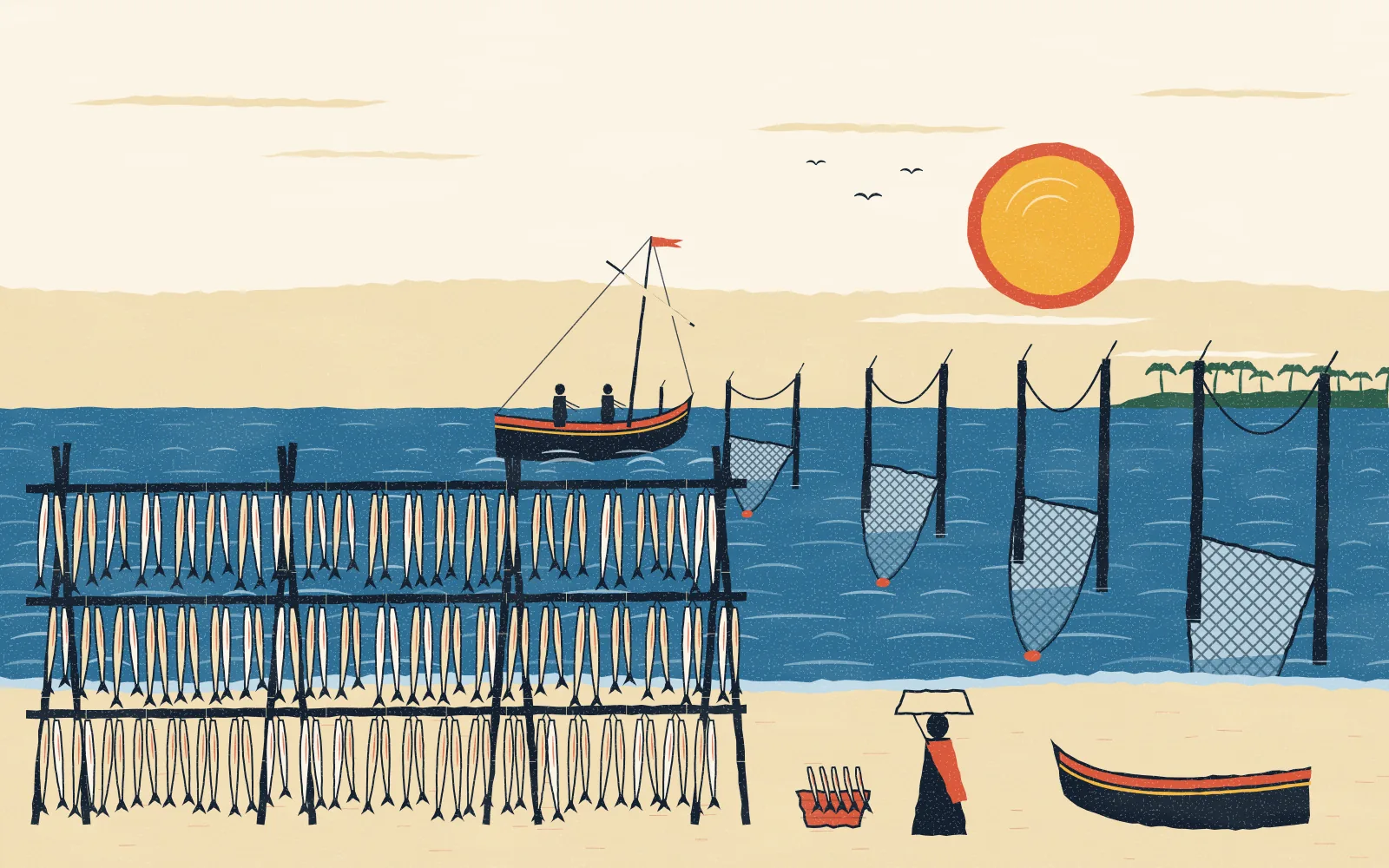
- Madh Koliwada, on the south side of the island, fishes the open sea. The main method is the bag net: wooden or metal poles (khunt) are fixed into the seabed, nets (dol) are strung between them, and the tide carries fish in.1
- Madh is a dried-fish village. About seven parts in ten of the catch is dried, and only three sold fresh.1 Traders from Gujarat and South India have bought Madh's dried fish for generations, and most of it goes to the Marol market.1 Kuta, a dried mix of small prawns and shrimp, is sold as fertiliser and animal feed.1
- Bhati is a Koli village of about 200 families, where fishing is still the main work. Boats are anchored close to the shore and nets are spread out to dry.2
- Erangal fished in its own way: villagers built bunds in the shallows and used a hand net called the aakhat, and boi (grey mullet) was a key catch.4
Where to buy
- Bhati's fish market, near the village entrance, sells fresh catch every day.2 Buses stop near the village.2 BEST bus 271 runs from Malad Station (West) to Madh Jetty by way of Bhati,5 and the air-conditioned A-269 (often listed as 269) runs from Borivali Station (West) to Madh Jetty.6 More in how to reach Madh Island.
- Madh Koliwada is the place for dried fish. Look for the racks along the shore, and ask the families drying them.1
- Fish and meat shops on Madh Local list their own timings and prices, and some deliver: see fish and meat on Madh Island.
What the fish are called
Madh's common catches include squid, sole, ribbonfish, Bombay duck, croaker and several kinds of prawns.1 Names you'll hear at the market:
- Bombil: Bombay duck. Bambuke bombil, semi-dried bombil, is a Madh speciality.1
- Mandeli: golden anchovies. Aatleli mandeli is a dry preparation of them.1
- Kolambi: prawns. Chikchiki kolambi is the dry-prawn dish.1
- Paplet: pomfret. Surmai: kingfish. Rawas: Indian salmon. Kurli: crab. These are the names used at fish markets across Mumbai.
- Kanji: not a fish but a fish porridge, and palyachi ukhar is a hilsa broth, if you're eating rather than buying.1
The monsoon fishing ban
Expect less fresh fish in these months, and ask the shop what it has. Boats that break the ban can have their boat, gear and catch confiscated.3
Buying well
- Go early in the day, and ask what came in that morning.
- Carry some cash as well as UPI, in case the phone network is slow by the shore.
- Ask before you photograph people, boats and drying racks. These are workplaces.
- Want it cleaned and cut? Ask the seller, and agree the price first.
Eat it the local way: Koli women run small seafood eateries in the villages.12 More in things to do on Madh Island.
Places in this guide
Sources
- Jio Institute heritage archive, Madh Koliwada (research with local historian Kiran Koli, 2024) exhibits.jioinstitute.edu.in
- Mumbai Pulse, Bhati village on Madh Island (16 Dec 2025) mumbaipulse.news
- Free Press Journal, Maharashtra's 61-day monsoon fishing ban (22 May 2026) freepressjournal.in
- Jio Institute heritage archive, Erangal village exhibits.jioinstitute.edu.in
- go4mumbai, BEST route 271 go4mumbai.com
- Moovit, BEST route A-269 moovitapp.com
We check each fact against these sources and only state what they support. Something changed or wrong? Tell us.